BigQuery
BigQuery is a fully managed, serverless data warehouse provided by Google Cloud Platform (GCP). It enables seamless operation across multiple clouds and scaling with your data requirements. It offers integrated machine learning/artificial intelligence (ML/AI) capabilities and business intelligence (BI) tools, facilitating large-scale insights and analysis.
What can you do with BigQuery in Custify?
- You will be able to retrieve People, Events, and Companies from your BigQuery data warehouse
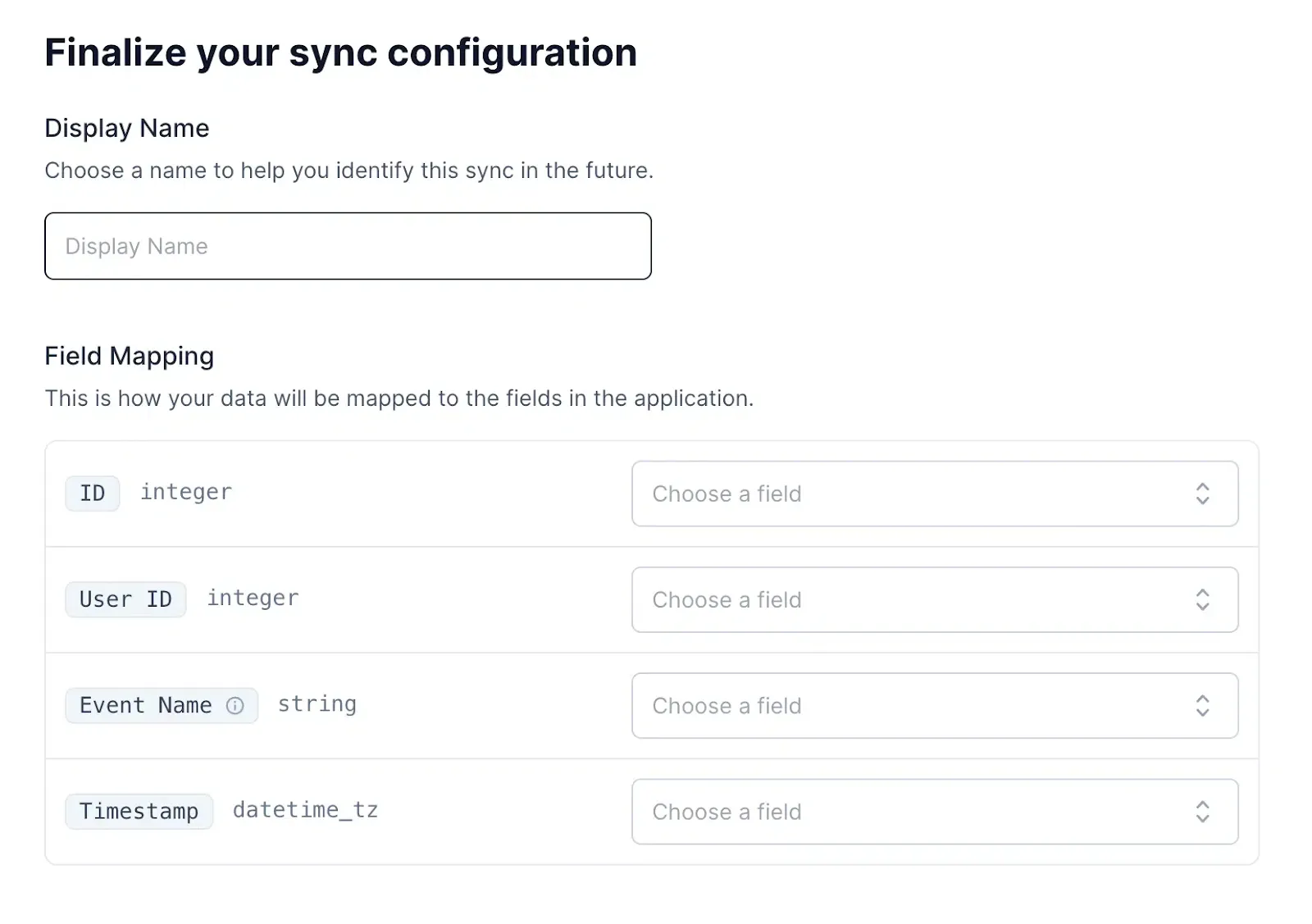
- You will be able to easily map your source data to Custify’s designated data objects, and use these events in the same way as the ones that would come from your own backend. That means you’ll be able to segment your customers, define lifecycles or create playbooks based on calculated metrics using these data points.
Depending on the geographical location of your data (Germany, Ireland or US), you will need to whitelist a list of IPs before activating the data warehouse:
Frankfurt business:3.123.52.1563.67.152.22418.159.43.17018.194.219.2193.74.25.43 Ireland 34.253.103.15, 176.34.236.120, 54.73.1.213 | US business:3.142.88.1818.188.66.1843.19.0.1973.140.205.1813.140.83.245 |
|---|
Activation
1. Sign in to Custify and navigate to the Integrations page.
2. Select the Data Warehouse integration.
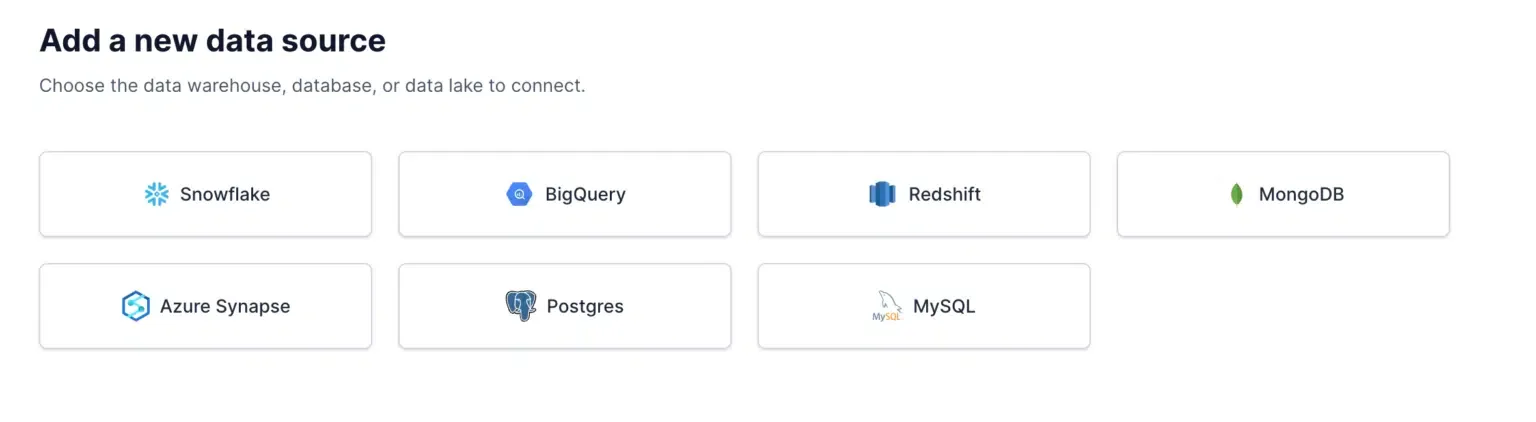
3. Click New Sync and then New Source, and select BigQuery.
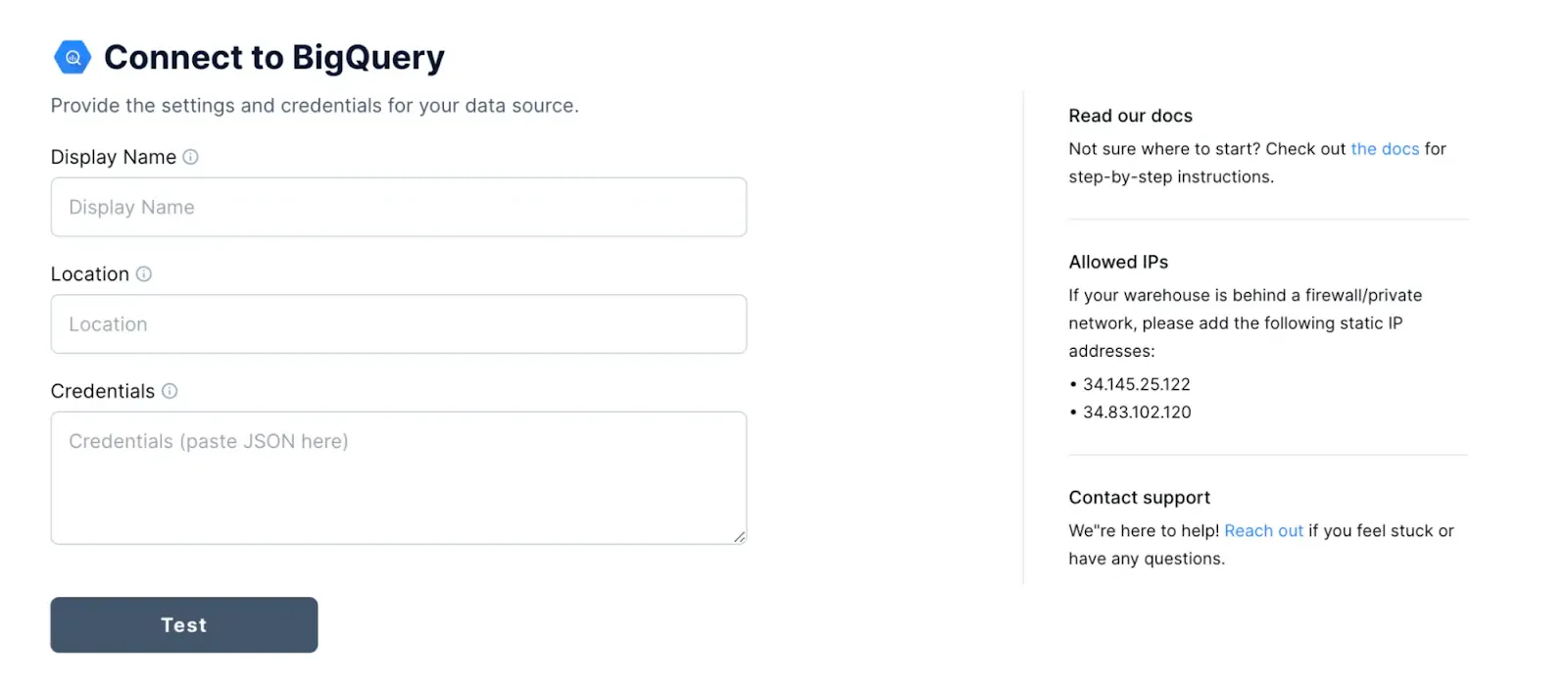
4. Fill in your connection information.
- Your Service Account Key can be obtained in the Google Cloud web console by navigating to the IAM page and clicking on Service Accounts in the left sidebar. Then, find the service account you want Custify to use in the list, go to its Keys tab, and click Add Key. Finally, click on Create new key and choose JSON.
- We recommend creating a dedicated Service Account for Custify to access your data warehouse. It must have the following roles: BigQuery Data Editor and BigQuery Job User.
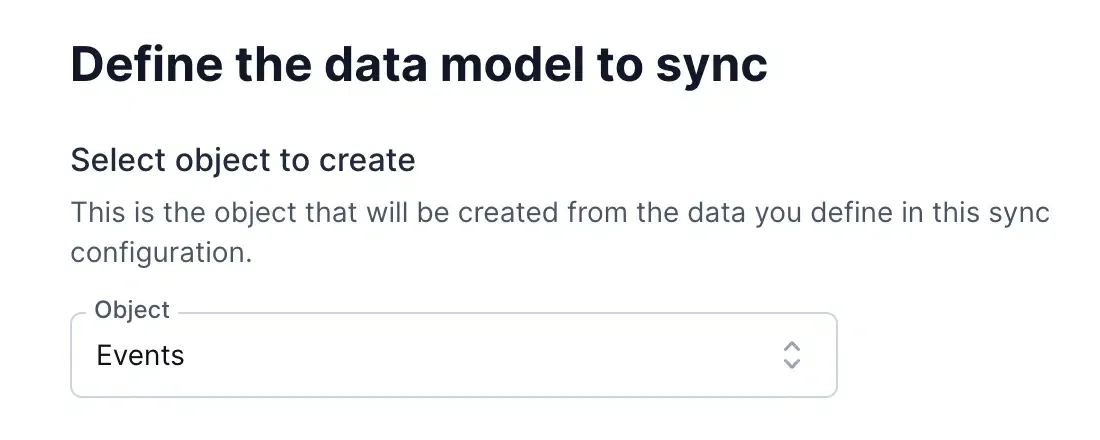
5. Select which Custify object you want to create from your data: People, Events, or Companies.
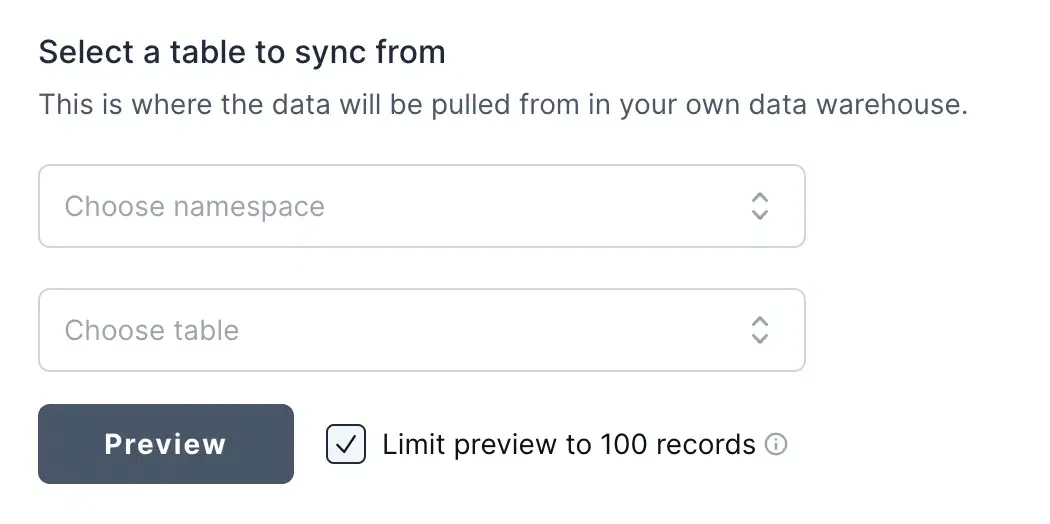
6. Select the source data in your BigQuery data warehouse. Then, select the namespace and table in your data warehouse that contains the source data.
7. Map the fields in your source data to the fields expected by Custify.